Eugene Boudin (1824-1898)
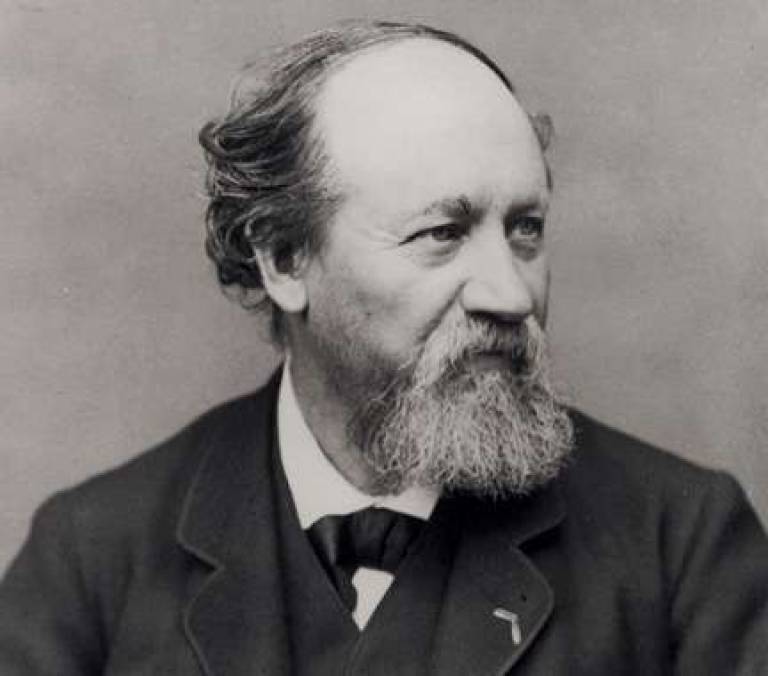
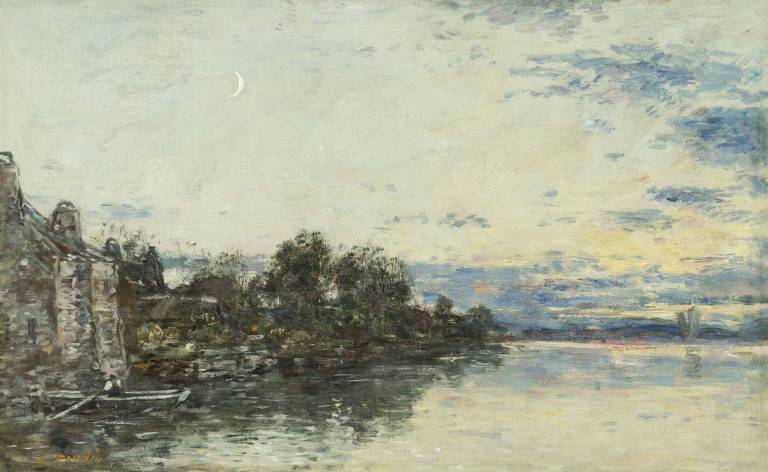
Eugène Boudin’s father was a merchant seaman. His mother was a maid in a shipping company. As a child, Eugène’s family moved a stone’s throw away from Honfleur: their new home would be Le Havre. It is easy to understand Boudin’s (1824-1898) predilection for coastal landscapes (coastlines, harbours and fashionable beaches) in perpetual motion and his fascination with the play of light. He once said of himself: ‘I will do other things, but I will always be the painter of beaches’. He is however better defined as ‘the painter of skies’. In his canvases, the sky takes up a lot of space: two-thirds of the painting. And although Boudin started painting late, he quickly freed himself from the academic approach. He applied paint without trying to achieve a precise result. He was one of the first painters to leave the studio and paint on the spot.
Camille Corot called him ‘the king of skies’. Born in Honfleur and brought up in Le Havre, Eugène Boudin was constantly inspired by the changing light that bathed the Seine estuary. And it was only natural that he should befriend the man who was to become the leader of Impressionism: a certain Claude Monet.
It was in Le Havre that Claude Monet met Eugène Boudin, sixteen years his senior. It was a decisive meeting for both of them. From Boudin, his mentor, Monet learnt immediacy and speed of execution.
‘I consider Eugène Boudin to be my master (…) I owe everything to Boudin and I am grateful to him for my success’. - Claude Monet
Although he was a latecomer to recognition, some of Eugène Boudin’s works are now exhibited in prestigious museums, such as View of Venice at the Museum of Fine Arts in Boston, The Beach at Trouville, circa 1865 at the Bridgestone Museum of Art (Japan) or Etretat, the Cliff of Aval, 1890, oil on canvas at the Museo nacional Thyssen-Bornemisza in Madrid. The National Gallery in London and the Metropolitan Museum of Art in New York are also worth mentioning, and it’s easy to see why the artist’s art (and his native region) has spread far beyond our borders. It goes without saying that some of his paintings are so highly prized that they now sell for gold.